

.png)
The Strait of Hormuz Crisis: How the U.S.-Iran Conflict Is Reshaping Global Oil Markets
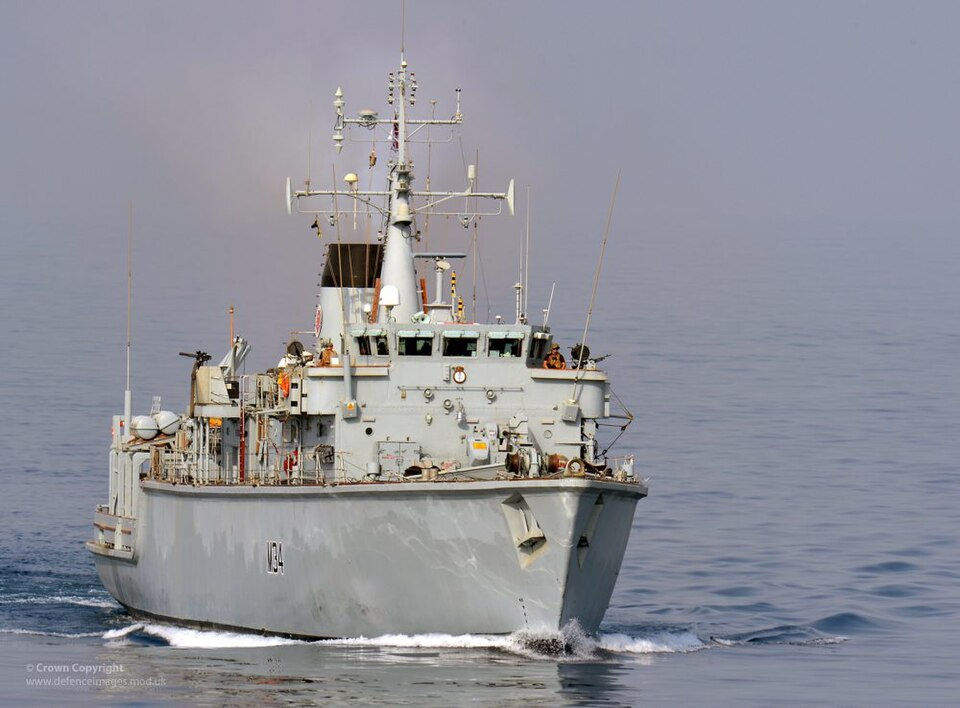
Situated between the United Arab Emirates, Iran, and Oman, the Strait of Hormuz is one of the most crucial chokepoints in the global oil supply chain. About 25% of the world’s seaborne crude oil flows through the strait, making it a key economic factor in the United States’ ongoing military conflict with Iran.
Today, the strait exists at the center of a rapidly escalating standoff between the United States and Iran, as a U.S. naval blockade of Iranian ports, broken ceasefires, and botched diplomatic talks push the region into growing uncertainty.
The origin of this crisis can be traced back to February 28, 2026, when the United States and Israel launched coordinated airstrikes against Iran, destroying key military infrastructure as well as killing Iran’s Supreme Leader Ali Khamenei.
Iran responded to this dramatic escalation by closing the Strait of Hormuz on March 4, 2026, threatening the flow of oil to much of the world, including Europe and Asia. What began as a regional conflict quickly escalated into a military confrontation with consequences for the entire global economy.
Caught between its support for Israel and the economic repercussions of a closed strait, the U.S. launched a military campaign titled “Operation Epic Fury” in mid-March to reopen it. President Trump declared on Truth Social in March that the Iranian military had been destroyed and that the strait had been reopened. These claims were disputed by the Iranian government, which continued to restrict and charge passage tolls exceeding $1 million per vessel, reinforcing its control over the strait despite U.S. claims.
As the Iranian government continued to refuse to back down, combined with rising dissatisfaction domestically and soaring energy costs, the U.S. and Iran agreed to a two-week ceasefire on April 8, 2026. This agreement included the reopening of the Strait of Hormuz; however, its fragility became apparent as diplomatic talks held in Islamabad on April 11, 2026, and April 12, 2026, collapsed without a formal agreement. The ceasefire was set to expire on April 21, but was extended indefinitely by President Trump.
Shortly after the collapsed talks, President Trump announced that the U.S. Navy would impose a formal blockade, not on the strait, but on Iranian ports and coastlines. This blockade went into effect on April 13, with more than 10,000 U.S. troops, as well as ships and fighter jets, stationed across the Gulf of Oman and the Arabian Sea.
Joint Chiefs Chairman General Dan Caine specified that the blockade “applies to all ships, regardless of nationality, heading into or from Iranian ports.” Within the first day, the U.S. Navy had turned back 13 ships.
The effects of this war do not exist in a vacuum, and they can be felt in the United States. According to CNBC, by the start of April, U.S. gasoline prices had surged above $4 per gallon for the first time in more than three years. In response, Vice President JD Vance told consumers that there is “a rough road ahead.” In mid-March, Vance reassured consumers that prices would “come back down to reality,” but as of April 21, crude oil prices have surged more than 55%, rising from $72 a barrel to almost $120.
The situation in Iran is highly volatile, with conditions changing rapidly. According to the New York Times, the second round of peace talks scheduled to be held in Pakistan has been “put on hold after Tehran failed to respond to American positions.” Iran continues to publicly insist it has no plans to return to the negotiating table, even as Pakistan and other mediators work behind the scenes to bring Tehran back into the room.
Trump has threatened to "knock out every single power plant and every single bridge in Iran" if talks collapse, while telling CNBC on the morning of April 21, 2026, "I expect to be bombing because I think that's a better attitude to go in with. But we're ready to go. I mean, the military is raring to go." Iran's parliament speaker, meanwhile, has called the blockade "ignorant" and vowed no vessel will transit the strait without Tehran's consent.
With the ceasefire extended but no deal in sight, the Strait of Hormuz remains a defining geopolitical crisis. Iranian gunboats are firing on tankers, oil markets are rattled, and the gap between Washington and Tehran concerning control of the strait itself shows no sign of closing. A ceasefire is not a resolution, and with every passing day, the cost of failure grows higher.



Been trying out Nano Banana for AI image generation lately. You just describe what you want in plain text and it generates something — built on Gemini so the quality is decent. Handles a range of styles from realistic to anime. Useful for quick concept visuals without needing to set up anything locally.
Escape Road 3 combines thrilling car chases with exciting obstacle avoidance gameplay to create a highly entertaining experience. The smooth controls and increasing difficulty make the game addictive from the very beginning. It’s one of the best free online racing games today!
I was looking for information about the 6club game login process, and this guide explains each step clearly. The section on common login issues is especially useful for first-time users.
The Goa Game Register steps are explained clearly for beginners. A section on common registration errors and how to fix them would be a great addition.
It is heart-wrenching to read about the heavy burdens our farmers carry. When life feels overwhelming, I occasionally turn to simple puzzles like スイカゲーム for a brief mental escape. We must do more to support their mental health while honoring their immense legacy.