

.png)
Rural America Faces Rising Suicide Rates Amid Persistent Financial Losses
- Sarah Dwyer
- May 7
- 3 min read
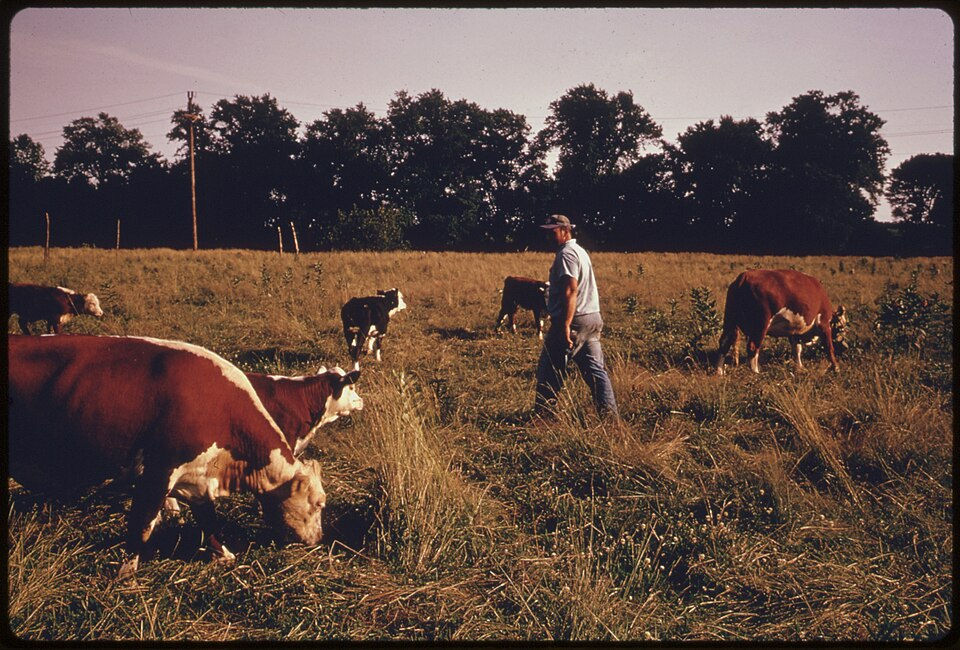
In the quiet corners of rural America, farmers are dying at increasingly alarming rates. This increase comes not at the hands of workplace accidents or natural causes, but suicide. With a 40% rise in suicide rates between 2007 and 2017, small agricultural communities across the country are losing their workers at a dangerous pace. While economic instability and international trade policies have intensified financial strain, the rising suicide rate among American farmers is not just a result of monetary pressure. Instead, this emergency reflects a deeper crisis at the intersection of rural economics, mental health access, and occupational identity.
Over the past six years, since the COVID-19 pandemic, many farmers have found economic recovery nearly impossible. The nine major row crops–cotton, barley, sorghum, wheat, rice, oats, peanuts, corn, and soybean–are the nation’s agricultural backbone and contribute significantly to the economy. Yet, all nine have yielded financial losses. These continued financial hardships have only been exacerbated by the Trump administration and ongoing trade wars being waged overseas. Under the International Emergency Economic Powers Act (IEEPA), the US began placing tariffs on China amongst other countries. In response, China placed a tariff as well as an additional soybeans. With China being the largest consumer of soybeans, $12.6 billion, these American farmers took a particularly hard hit. While production prices continued to grow and sales continued to plummet, soybean farmers ended 2025 at $89 dollars an acre, marking the third consecutive year of significant fiscal loss. Ultimately, the current state of American agriculture is forcing many farmers out of the profession. Most agricultural workers have picked up second or third jobs, with some leaving the profession altogether. Many farmers feel betrayed by President Trump, having voted for him but now facing sharp revenue declines following retaliatory tariffs.
Farmers face unique challenges compared to other professions, considering many live on the same farms that they work. This format often makes it difficult to separate business from personal life. Thus, when crop sales decline, the whole identity of a farmer is tied to that perceived failure. Land is often passed down through families for decades, sometimes centuries, creating a profound sense of responsibility to maintain both productivity and legacy. When yields fail or debts mount, farmers may interpret these economic outcomes as personal failures rather than market fluctuations beyond their control. Despite the establishment of this cultural phenomenon, rural America continues to be a hard-to-reach population when it comes to suicide prevention and mental health advocacy. Historically, rural farmers value attributes such as stoicism, grit, and reservedness. These are the mentalities that have allowed them to endure market dips and economic recessions. But, these are also the exact barriers preventing the effective implementation of mental health programs for agricultural workers. Admitting financial strain or mental distress may feel incompatible with the expectation to “tough it out.” In predominantly male agricultural sectors, traditional norms surrounding masculinity can further reinforce silence around depression and suicidal ideation. Even when services are technically available, they are often turned away or dismissed by populations who need them the most.
Farmer suicide, therefore, cannot be understood solely as a consequence of commodity prices or trade policy. It reflects a broader public health challenge shaped by economic volatility, cultural norms, and limited mental health infrastructure. Addressing the crisis requires more than stabilizing markets; it demands targeted rural mental health investment and a shift in how agricultural communities approach conversations around emotional wellbeing.



This devastating rural farm crisis exposes how ignored mental health gaps compound economic despair, and resources like cabnox could help connect isolated farmers to accessible counseling support far from urban clinics.
Online (รับงานนครปฐม) communication relationships allow people to connect through messaging, video calls, social media, and dating platforms regardless of distance. They help individuals build friendships, romantic connections, and professional networks by encouraging regular conversations and shared experiences. Strong communication, honesty, and mutual trust are essential for maintaining meaningful online relationships, which can eventually grow into lasting bonds both online and in real life.
Always look forward to new updates here. You never disappoint. Siding Contractor Victoria, BC
It's heartbreaking to read about the significant rise in farmer suicides, especially how financial strain and occupational identity are interconnected. This sheds a much-needed light on the mental health crisis in rural communities. - Bracket Maker
This is a heartbreaking issue that highlights the real challenges many rural communities continue to face. Financial stress, limited access to resources, and social isolation can have a significant impact on mental health. Supporting local communities through programs, small businesses, and shared initiatives whether through community events, crafts, or projects involving Online Sew On Patches can help foster a greater sense of connection and belonging during difficult times.