

.png)
A Conversation with Edward Luttwak: An Alternative Perspective on International Security
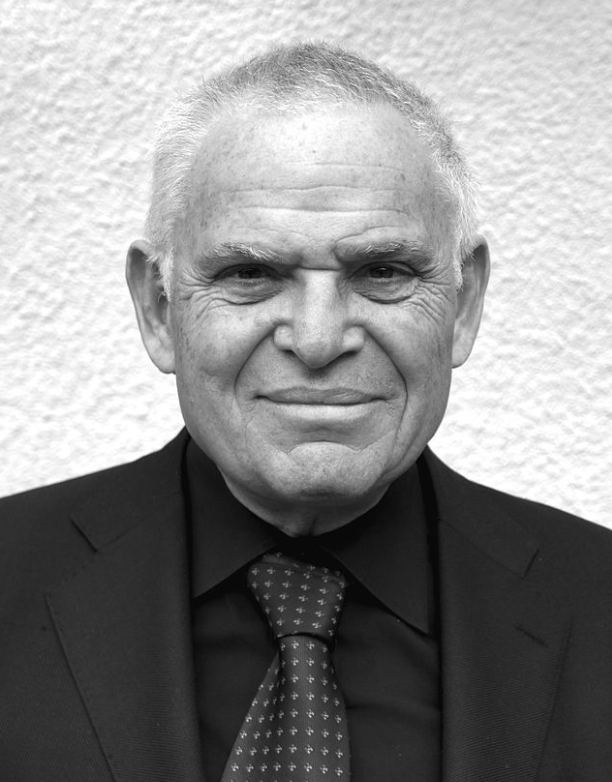
Navigating diplomatic relations, managing security dilemmas, and acting with the foresight needed to prevent conflict are among the most pressing challenges facing today’s international relations analysts. In this Boston Political Review exclusive, strategist Edward Luttwak offers an alternative perspective on how to analyze and navigate the Russia-Ukraine war.
Mr. Luttwak is a Romanian-Italian-American military strategist and author who has advised U.S. President Ronald Reagan, the U.S. Department of Defense, the National Security Council, the State Department, the Prime Minister of Kazakhstan, the government of Japan, the Dalai Lama, and more. He currently serves as a Senior Associate at the Center for Strategic and International Studies (CSIS) in Washington, D.C.
Vera: Russia’s full-scale invasion of Ukraine began over 1,360 days ago. With that in mind, do you still hold your June 2022 position that it's in the West's interest to come short of pursuing a total victory strategy over Russia? If you still hold that idea, what logic is sustaining that restraint from not just the U.S. but from NATO?
Luttwak: Yes, the original idea still holds. Russia has two faces. One looks west—it is aggressive, revisionist, and needs to be contained. From that perspective, it seems logical to weaken Russia as much as possible. But Russia’s other face looks east, toward China. Anyone who goes to Vladivostok or speaks with the Nevelskoy Naval University people will hear the same thing: Russians in the Far East are terrified of Russia’s weakness vis-à-vis China.
For example, the Chinese always imported wood from Russia, as did the Japanese and Koreans, because Siberia is full of trees. However, they were never allowed to cut trees in Siberia. And now, because of the overall weakness of Russia vis-a-vis China, which made it dependent on Chinese support in many different ways, they're allowed, for the first time ever, to cross the border into Siberia and cut; and of course, they don't even know what are the trees they're not supposed to cut, and if they did, they wouldn't care. That's number one.
Number two, there's been a whole change in the balance of power along the Ussuri River border about the authorities who control the river in between, who control fishing. [It] used to be all Russia, now it's China. And if you go along that border, there used to be substantial Russian border towns, and then there were miserable Chinese shacks on the other side. Now there are neon-lit big buildings and everything else. We cannot allow this to go on, because at the present moment, the city of Shenyang alone has more people than all of Siberia.
And the Chinese are beginning to act like it. For example, the Chinese media abruptly stopped using the Chinese word for Vladivostok, which was a copy of the Russian, and they have gone back to Haishenwai, which was the old Manchurian name for Vladivostok. And they've been renaming places on their maps, and that map is the map of the territory that they want. And you might think that what they want is to settle the last of the unequal treaties, which are the Beijing Treaty 1860, the Beijing Treaty 1862, which transferred the territories that now form the maritime provinces of Russia: the maritime air departments, plus a whole chunk of Siberia. Well… I may want more. According to the renaming, they want even more.
Now, we have entered into a strategic confrontation, we, the United States, and the whole West. Strategic confrontation with China. And therefore, we do not want Russia to concede further territorial control to China. We must end this war. On whatever terms we can get.
At the same time, Ukraine cannot sustain unlimited mobilization. Only half of Ukrainians of military age have ever served; the average age of a Ukrainian soldier is over 43.
Vera: How capable are European armies today to defend themselves without U.S. support, and is there a structural deficit in NATO that limits its capacity for military engagement? How does this affect the optimal role of the U.S. and NATO in Ukraine?
Luttwak: Who’s ever heard of expressing military requirements as a percentage of the GDP? They do that to avoid the subject. The subject is that the only thing we don't have is troops. By the way, the Russians are in no different position.
Russian young people are not fighting. Putin hasn't sent a single conscript into combat. So he's fighting with an 18th-century-type army, with mercenaries. With domestic mercenaries and people in prison, criminals. And thirdly, the Korean slave soldiers. The North Korean side soldiers. If any of them surrender to the Ukrainians, their families will be killed.
So, why is it like that? Because [Putin] is afraid of the Russian mothers, he hasn't sent a single unit of the Russian forces. That's why he did not declare war; he did not mobilize. But we don't care about that.
Given the fact that nobody in NATO is willing to fight at all, for any reason. With the exception of the Finns. Last year, there was conscription in Sweden, Denmark, Switzerland, and Finland. In Finland, which has 6 million people, they got 77,000 18-year-olds who joined the army as appointed. In Sweden and Denmark, which have reintroduced conscription and have 11 million people, they've got a total of 9,000. In other words, post-heroic mentality.
The whole of Europe always lived from the fact that if you grew up, you went to the army, the army taught you to fight right and left. And then you would go to war. Some people would get killed. People who didn't get killed returned. In prosperity and advancement from war to war, and eventually in technology, from war to war. Europe, the whole history of Europe, is dynamism. Strength. Energy. Children. Youth. All of it came through the process of war. Women wanted warriors, warriors wanted women, and they made children. And that's why Europe grew in population from war to war.
Today, what we have is NATO leaders talking about spending 5% of the GDP on defense. Now, please note, the Russians are not at all ahead in aviation. They are behind in aviation. The Russian Navy is shrinking and weak. So, we don't need the Navy or aviation. What we need are soldiers. But there are no soldiers, because although Europe is full of people who wake up in the morning and eat breakfast in an army barracks wearing a uniform, lunch and dinner, they're not soldiers. They're not real soldiers at all.
I just did a big survey. I went and interviewed friends and the military, armed forces, and so on. I asked each of them how many combat troops they had.
France has 117,000 soldiers. I'm talking about infantrymen and ground forces. They got, well, the foreign legion of fighters. And about 3 regiments of the Colonial troops, and now they call them the Marine. So, maybe they have 10,000. That's France.
Germany has been greatly alarmed since the invasion of Ukraine, and we've had promises of this and promises of that. At the present moment, the Bundeswehr has fewer people in it than it had the day the war started. And that's the Bundeswehr, the army, that's the whole thing, Army, Navy, Air Force.
Spain has made successive budget cuts since the end of the Cold War. They got rid of everything except generals. The colonels. So, all over Spain, you go to these barracks, often in historic buildings, and you'll find the commanding general and his staff with colonels, and then no soldiers. The soldiers there don't fight. And now… Talking about spending, the Spanish Navy has just accepted a submarine made by a Spanish shipyard with Spanish technology, diesel, electric, of course, and what is the cost? $3.8 billion. It's a state-owned shipyard. The people there are paid very well, but they went on strike twice to demand further pay. The Minister of Defense is a pacifist, so their defense spending might as well be flushed down the toilet. The Army has maybe 9,000 soldiers. The Spanish decided to quarrel with Israel, so they canceled the only weapon programs that were authentic, because these are combat-proven missiles from Israel, things that work. And so what they now have is domestic procurement: the diesel submarine. Now, this is a state shipyard in Spain. We don't know who designed it, we don't know if it works at all, but if you want to buy a high… the highest quality German submarine, it costs $1 billion. And 3.8 is more than the cost of the French nuclear submarine, which is 3 times as much.
The Italian Navy keeps buying warships, but many of the warships are moored alongside the dock because they have no money for operating them, they don't have crews for them, training, money, fuel, munitions, or anything else. So, they ordered the ships. The ships are delivered, and then they just sit there. And it's all defense spending.
Vera: Is the Finnish model how Europe changes its post-heroic mentality?
Luttwak: What's happened in the last few days, which involved me professionally, is that the peacekeepers for Gaza… It's very hard to get them. Because there are some leftover Hamas people with light weapons, like Kalashnikovs, RPDs, maybe. DSK maximum, and there might be some Islamic jihad with Kalashnikovs. Well, the different peacekeeping forces don't want to go to Gaza, because they might get shot at. In other words, they are eating, drinking, dressing, being trained, and being expensively equipped, as if they were soldiers, but they are not soldiers.
In my survey, I interviewed 19-year-old soldiers. In the different armies were all young soldiers. All of them told me, after 5 minutes, ‘Well, of course, I joined because of this, I joined because of that, but I'm not going to fight. I mean, I'm against fighting. The church is against war, after all.’ Some people simply said, ‘I'm not willing to fight. If there's a war, I'll run away.’
The only ones who joined the army to be in the army, and ready to fight, are the Finns. When Finns are 15 or 16, they join the Finnish army; in turn, the army doesn't lie to them, it tells them the truth. They say: ‘We have a border of 1,300 kilometers and we cannot possibly defend it. Okay, so your job is not to defend the border. Your job is to avoid the Russians when they come towards you, avoid going to the woods to the right, the woods to the left, etc. And then, when they stop, come out and kill them.’ That's why each soldier is issued a dagger. In addition to his weapon, they have a classic Finnish puukko, which is a killing dagger, not for peeling potatoes.
And the soldiers are told, avoid, don't stand in the way, don't get run down by tanks, step out from the artillery, and all that, wait until they stop, come out, and kill them. That's what we did in 1939; it worked. Because it's coherent and realistic: soldiers know that they're dealing with serious people. Moreover, when they finish the service, which is only one year, and super intensive, non-stop, non-stop, but only one year, they go into the reserves. So, each generation of reserves comes up. As a result, the Finnish army has 270,000 soldiers, which is 3 times the size of the Polish army. Poland has 38 million people, and they have 6 million. Behind those reservists, there are further reserves. I was at the annual roundup, which they do in the summer in Lapland, and they recalled the reservists, who are officially listed as reservists, but they provided snacks and food for twice as many, because, of course, twice as many came. They still have their uniforms, they have their weapons.
And there were half a million people running around in the different Lapland camps, each of them run by one of the regiments along the way. And so, that is what you get from 6 million people who know what they're doing.
Israel absorbed casualties well due to family structure; Finland and Israel exemplify European heroic cycles. Switzerland’s military service creates effective soldiers; the same with the French Foreign Legion recruiting Swiss volunteers. Many young Europeans today avoid service; they lie about readiness and defense spending.
Europeans have a “post-heroic” mentality. Unlike Israel and Finland, which absorb casualties, most European countries have no tradition of real warfare and cannot sustain serious combat operations.
Vera: Is Washington’s long-term grand strategy to construct a cross-theater containment architecture running from Europe through the Middle East to the Pacific, and extending the Western defense perimeter against Russia and, above all, China?
Luttwak: Well, you can see elements of that in practical reality, but there is no real containment of China. What is, is to prevent China from seizing Taiwan. And it's very easy to seize Taiwan, because the Taiwanese are more powerful in that. I mean, American politicians, statesmen, and some spent 10 years browbeating them and forcing them to introduce conscription. Their population is 23 million, and in 2024, they managed to conscript 9,000 soldiers, and of those 9,000, several, like 2,000, really dropped out. In other words, the Taiwanese don't want to fight.
The Chinese don't want to fight either. And in fact, when they lost 4 soldiers on the Gawan River fighting in 2020, June, they went into an 8-month silent period in which they planned how to present the four dead; each of them was made into a hero, and they had memorial halls built for all four. The families were rehoused, and so on. The post-heroic phenomenon has definitely arrived in China.
Xi Jinping keeps talking about war, telling troops to get ready to fight and win. Meanwhile, the country is aging and less inclined to fight. Any war would be an experiment with first-generation single-child soldiers.
Will to Power
Mr. Luttwak's perspectives will undoubtedly ruffle feathers, but they contain uncomfortable truths. After nearly three years of war, the European Union has offered Ukraine economic support (which seems to be wavering in 2026) but little meaningful military assistance. Likewise, the American peace plan appears less a genuine diplomatic negotiation than a handover of Ukraine to Russia. However morally troubling these choices may be, Luttwak's core advice is that international security cannot be understood through sentiment. Strategy, as he defines it, is the interaction of opposing wills.
If so, then Presidents Trump and Putin must be understood as the primary agents driving their states' foreign policies. Trump's approach to diplomacy is overtly transactional; alliances are business arrangements rather than inviolable commitments. Putin, for his part, is similarly unapologetic in his bellicose approach to statecraft. However, Luttwak argues that the conflict over Ukraine is not simply a clash between strongmen; it is also due to the failure of European leadership. Europe has been slow to adjust to war on its own continent. NATO, sustained primarily by U.S. power, cannot indefinitely sustain Europe's security obligations. Whatever commitments the current American administration fails to honor will result only in verbal condemnations, because Europe lacks the means to enforce compliance when political will is absent.
This is why decoupling appears increasingly inevitable: Europe cannot stop it. Nor can Europe defend itself without U.S. support. As Luttwak emphasizes, decades of reductions in combat personnel cannot be reversed with sudden increases in budgetary spending. Money can buy equipment, but it cannot manufacture soldiers—or the culture that produces them. Europe's "post-heroic" mindset is therefore not a cynical observation; it is the central constraint on Western security.
Paradoxically, this post-heroic condition may contain a small measure of hope. If no modern society, be it European, American, Russian, or Chinese, is willing to sustain heavy casualties indefinitely, then large-scale war becomes ever harder to wage. The new world disorder may be unstable, but it also illustrates that all major powers could eventually converge on a reluctance to fight prolonged conflicts, if any at all.
Still, Luttwak leaves open the possibility of exceptions. Finland and Israel demonstrate that societies confronted with existential threats can sustain a heroic military culture, absorb losses, and remain willing to fight. Many in the international relations community treat war with China as a foregone conclusion. While Luttwak recognizes the inevitability of China's emergence, he implicitly (and I think, unknowingly) rejects the fundamental fatalism found in many analyses of American-Chinese relations. Strategy is the will of nations, not the personality of a single leader. Trump, Putin, and Xi will pass; their legacies can be reversed, if not erased. As long as national wills can change, diplomacy can re-emerge. War may be the continuation of politics by other means, but this flame cannot burn indefinitely.



I came across your blog, and I must say the content you’re sharing is fantastic! The insights are incredibly valuable, and your writing style makes everything so easy to follow. Keep up the amazing work – I can’t wait to read more! P.S. Absolutely loved the breakdown on the cropped faux leather jacket such a sharp look with incredible detail!
For lottery 7, does anyone know if the results are updated automatically or if we need to refresh the page? I’m asking because sometimes these platforms show delayed results, and it becomes confusing for new users.
I’m trying to complete the OK Win Register process, but I wanted to confirm something. Does it require mobile OTP verification for everyone, or only in some cases? Also, is PAN or any extra document needed later, or just basic details are enough?
Fashion lovers appreciate how these bags elevate simple clothing, making a statement without overdoing it. Whether matched with jeans or a cocktail dress, Trendy Beaded Bags bring charm and flair to every wardrobe.